

India’s approach to dealing with the United States in the current geopolitical landscape is shaped by a multifaceted strategic partnership that has evolved significantly over the decades. This analysis delves into the historical context, recent developments, and key areas of cooperation and contention, providing a detailed overview for understanding India’s current stance.
Historical Context and Evolution
The relationship between India and the US has transitioned from Cold War-era distrust, particularly over India’s nuclear program and non-alignment policy, to a robust partnership in the 21st century. During the Cold War, India’s tilt towards the USSR and the US’s support for Pakistan, especially during the 1971 Indo-Pakistani War, strained ties. However, post-1990s, with India’s economic liberalization and the end of the bipolar world, relations warmed, focusing on economic and strategic cooperation (India–United States relations).
Recent decades have seen bipartisan support in the US for strengthening ties, with both Republican and Democratic administrations acknowledging India as a key partner. This is reflected in high-level engagements, such as the Strategic Dialogue established in 2009 and the 2+2 Ministerial Dialogue, which has been a premier mechanism for advancing bilateral initiatives (U.S. Relations With India).
Recent Developments and Initiatives
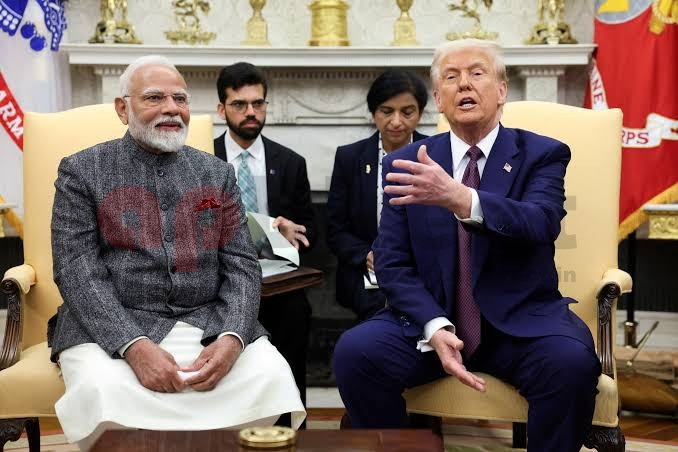
As of March 2025, the relationship is on a positive trajectory, with significant developments highlighted in recent joint statements. On February 13, 2025, President Donald J. Trump hosted Prime Minister Narendra Modi in Washington, DC, launching the “U.S.-India COMPACT (Catalyzing Opportunities for Military Partnership, Accelerated Commerce & Technology) for the 21st Century.” This initiative aims to drive transformative change across key pillars, with a results-driven agenda and initial outcomes planned for the year, demonstrating mutual trust (United States – India Joint Leaders Statement).
Another notable initiative is the U.S.-India TRUST (“Transforming the Relationship Utilizing Strategic Technology”), announced in the same statement, focusing on collaboration in critical and emerging technologies like defense, AI, semiconductors, quantum, biotechnology, energy, and space. This reflects a deepening technological partnership, ensuring sensitive technologies are protected while encouraging verified technology vendors (United States – India Joint Leaders Statement).
In 2023, the India-U.S. Defense Acceleration Ecosystem (INDUS-X) was launched, fostering defense innovation through joint challenges and collaborations between the Indian Ministry of Defence’s Innovations for Defence Excellence (iDEX) and the US Department of Defence’s Defense Innovation Unit (DIU). Recent awards of over $1 million to US and Indian companies for undersea communications and maritime intelligence, surveillance, and reconnaissance (ISR), with a new challenge on Space Situational Awareness (SSA) in Low Earth Orbit (LEO), underscore this commitment (Joint Fact Sheet: The United States and India Continue to Expand Comprehensive and Global Strategic Partnership).
Economic and Trade Dynamics
Economically, the US has emerged as India’s largest trading partner in 2022-23, with bilateral trade reaching USD 128.55 billion, a 7.65% increase from the previous year. This growth is driven by increasing economic ties, with the US being a significant source of foreign direct investment (FDI), and Indian companies like Reliance Industries, Tata Consultancy Services, and Wipro investing heavily in the US, creating jobs and fostering business ties (India-US Relations).
However, trade tensions have been noted, particularly around tariffs. The US has pressured India to reduce tariffs on key imports, with President Donald Trump previously deriding India as a ‘tariff king’ for imposing steep barriers. In response, India has made concessions, such as reducing tariffs, to ease tensions and aim for a target of doubling commerce to $500 billion by 2030, reflecting a recalibration of trade policies to maintain good relations (Is India’s Foreign Policy Being Subordinated To US Interests?).
Defense and Security Cooperation
Defense cooperation is a pillar of the partnership, with the aggregate worth of defense acquisitions from the US crossing over USD 13 billion. The Defence Technology and Trade Initiative (DTTI), launched to simplify technology transfer policies and explore co-development and co-production, has identified pathfinder projects, enhancing India’s defense industry and military capabilities. Recent collaborations include joint work plans to counter Improvised Explosive Devices (IEDs) and exchanges of terrorist screening information, strengthening counter-terrorism efforts (Consulate General of India, Atlanta, United States of America).
The INDUS-X initiative has facilitated pathways for defense and dual-use companies to access testing ranges in both countries, with joint challenges designed to build a defense innovation bridge. This cooperation is particularly significant given India’s strategic interests in countering regional security threats, especially from China and Pakistan, and aligns with the US’s interest in a stable Indo-Pacific region (Joint Fact Sheet: The United States and India Continue to Expand Comprehensive and Global Strategic Partnership).
Strategic Autonomy and Regional Considerations
India’s foreign policy towards the US is characterized by a commitment to strategic autonomy, a legacy of its non-alignment policy during the Cold War. This autonomy is evident in India’s approach to balancing relationships with multiple powers, including Russia and China, while deepening ties with the US. For instance, despite US sanctions on Iran, India has maintained strategic interests in buying oil from Iran, with the US eventually exempting India from sanctions, recognizing India’s importance as a partner (India–United States relations).
This balancing act is crucial in the context of regional dynamics, particularly with China. India’s policy seeks to leverage its partnership with the US to manage an increasingly assertive China, as seen in joint statements calling for action against terrorist groups and addressing regional security concerns. However, India remains cautious, ensuring its foreign policy does not appear subordinated to US interests, especially in areas like defense and trade, where national sovereignty is paramount (Is India’s Foreign Policy Being Subordinated To US Interests?).
Key Areas of Contention and Management
While the relationship is largely cooperative, occasional issues arise, such as trade disputes and human rights concerns raised by the US. India’s response has been to engage in dialogue, as seen in the Ministerial Trade Policy Forum and economic dialogues, to address these issues. For example, the US has expressed concerns over religious freedom, funding projects worth USD 750 million in 2023-24 to promote it in India, which has sparked political controversy domestically (US India relations : Latest News and Updates | Business Standard).
India manages these tensions by emphasizing national interest, as stated by Prime Minister Modi, who noted that despite occasional issues, the relationship is driven by deepening engagement and friendship. This approach ensures that differences are addressed through diplomatic channels, maintaining the overall positive trajectory (India-US Relations).
Unexpected Detail: Cultural and People-to-People Ties
An often overlooked aspect is the significant Indian diaspora in the US, which acts as a cultural bridge and economic link. Indian Americans, highly educated and with household incomes nearly double the national average, contribute to strengthening ties through business, education, and cultural exchanges. The number of Indian students in the US for higher education has tripled in the last decade, mostly in STEM fields, enhancing people-to-people connections (India-U.S. Relations in 14 Charts and Graphics).
India is likely to deal with the US by continuing to build on existing partnerships, addressing trade and other tensions through dialogue, and leveraging the relationship to enhance its global standing while maintaining strategic autonomy. This approach ensures a balanced and mutually beneficial engagement, reflecting the complexity and dynamism of their bilateral ties.
Key Citations
- U.S. Relations With India United States Department of State
- United States – India Joint Leaders Statement U.S. Embassy & Consulates in India
- India–United States relations Wikipedia
- India’s Foreign Policy Ministry of External Affairs
- The Promise and Prosperity of the U.S.-India Relationship U.S. Embassy & Consulates in India
- Is India’s Foreign Policy Being Subordinated To US Interests? Outlook India
- Consulate General of India, Atlanta, United States of America
- Joint Fact Sheet: The United States and India Continue to Expand Comprehensive and Global Strategic Partnership U.S. Embassy & Consulates in India
- India-US Relations Drishti IAS
- US India relations : Latest News and Updates Business Standard
- India-U.S. Relations in 14 Charts and Graphics Brookings