

WASHINGTON D.C. 12-04-2026 – President Donald Trump has announced a drastic plan for the U.S. Navy to take immediate action in the Strait of Hormuz, reportedly calling for a blockade of all ships attempting to enter or leave the waterway.
The proposal, shared in a Truth Social post and a recent interview with Fox News, suggests the U.S. would also interdict vessels in international waters that allegedly paid “illegal tolls” to Iran and clear Iranian-laid mines. The stated goal is to enforce “all or none” free passage and prevent Iran from profiting through extortion. Reports suggest that other nations could also join this effort.
This move is framed as a direct response to the ongoing conflict involving the U.S., Israel, and Iran. While a traditional naval blockade is an act of war under international law, this proposal is seen as a way to counter Iranian actions and existing tensions in the region.
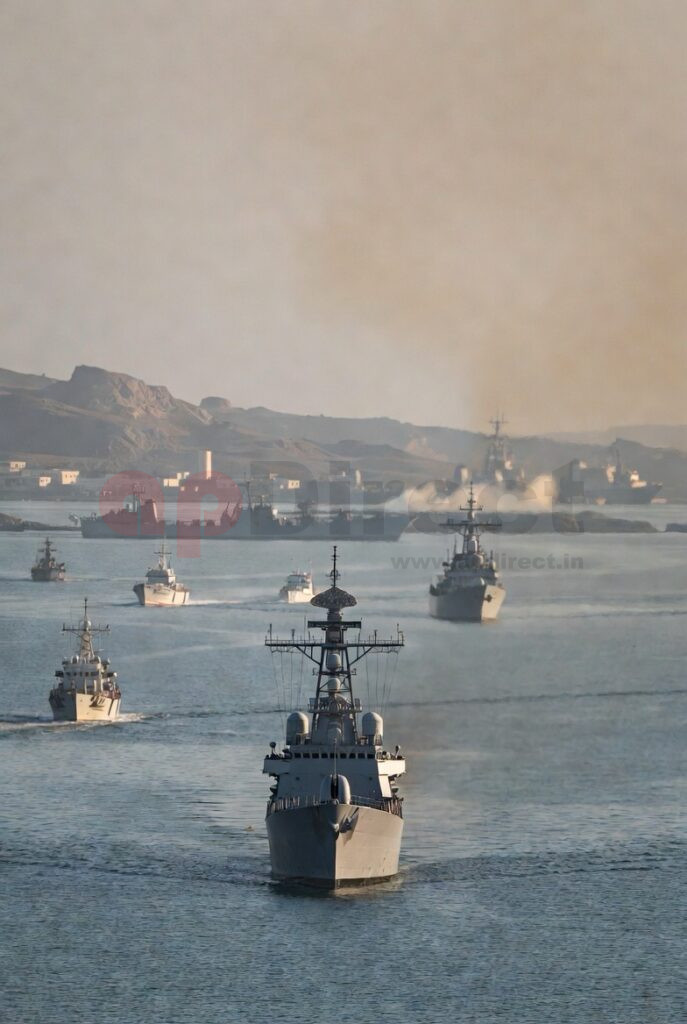
What This Means for Global Energy
The Strait of Hormuz is a critical global chokepoint, handling roughly 20% of the world’s oil and significant LNG transit daily. A sudden enforcement action would have immediate, severe consequences:
- Shipping Chaos: Shipping insurance rates are expected to spike, leading many tankers to divert or halt operations.
- Market Shock: Oil prices could surge significantly in the short term, potentially pushing them into the $100–$150+ range, triggering global energy shocks, inflation, and volatility in stock markets.
- Iran’s Revenue Loss: Iran would lose any revenue from oil exports or tolls, though analysts note Iran could respond in ways that are not purely military.
The Likely Course of Action
If the U.S. were to implement this plan, the immediate response would involve the U.S. 5th Fleet, led from Bahrain, deploying naval assets—including destroyers, cruisers, submarines, and potentially carrier strike groups—to establish patrol zones, issue warnings, and inspect vessels. Minesweeping operations would also be planned to clear Iranian mines.
However, the situation carries significant risks of escalation. Experts suggest a range of potential outcomes:
- Limited Skirmishes (Most Likely): The most probable near-term scenario involves targeted naval and air skirmishes. Iran could retaliate with missiles or mines, prompting a measured response from the U.S. and regional allies. This could lead to casualties and prolonged disruption to oil flows, ultimately resolving through diplomatic backchannels.
- Regional Spillover: There is a possibility that the conflict could expand, drawing in Gulf states or other regional actors, though this would likely remain contained within the Middle East.
- Major Conflict (Lower Probability): A full-scale war remains a lower-probability scenario, but if Iran were to sink a major U.S. vessel or sustain a long-term blockade, the risk of a major conflict could rise.
China’s Role: Economic Pressure, Not Direct Confrontation
The involvement of China is a complex factor. As the world’s largest oil importer, China’s energy security is tied to the stability of the Strait.
Analysts suggest China’s response would likely be diplomatic rather than military. China has already expressed strong protests against the U.S./Israel actions and has indicated it would not join a direct military confrontation. Instead, China is likely to use its economic leverage—through diplomatic protests, potential tech/arms flows, and hedging its energy purchases—to pressure the situation.
While an incident involving a Chinese tanker could spike tensions, China’s primary interest is economic stability, not a direct military confrontation with the U.S. Navy.
President Trump’s proposed action represents a high-stakes naval standoff with real potential for global economic pain. While the risk of a full-scale war is contained, the immediate environment is volatile, with diplomacy and market reactions poised to be the most critical factors in determining the outcome.