
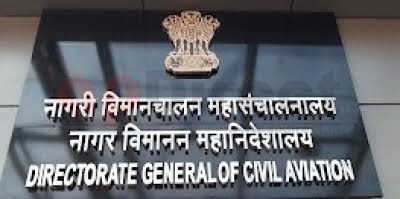
India’s aviation safety regulator is facing a severe staffing shortfall that threatens its ability to carry out its role, a parliamentary panel has warned in a new report.
The committee described a “profound and persistent shortage” of personnel at the Directorate General of Civil Aviation (DGCA), calling it an “existential threat” to the country’s aviation safety framework. The report was presented in the Rajya Sabha on Wednesday as part of a broader review of aviation safety launched after the 12 June Air India crash that killed 260 people. While the report does not directly mention the crash, it raises multiple concerns, including overstretched air traffic controllers.
The BBC has asked the DGCA and the Civil Aviation Ministry for comment. Committee recommendations are not binding but have previously shaped policy and regulations.
India, now the world’s third-largest air travel market, has seen rapid expansion spurred by low-cost carriers, rising incomes, and a government push to build new airports. However, this boom has also brought mounting pressures: a shortage of qualified staff, fatigue among existing personnel, and growing infrastructure constraints.
Since the June crash, scrutiny of both the airline industry and the regulator has intensified. Last month, the DGCA chief told the BBC that India generally performs better than the global average in safety metrics set by the International Civil Aviation Organization (ICAO), with the exception of two years between 2010 and 2024.

The parliamentary panel, comprising members of both ruling and opposition parties, identified several systemic weaknesses. It noted that the DGCA is unable to effectively fulfil its mandate in its current form, pointing to nearly 50% vacancies—553 of 1,063 sanctioned posts remain unfilled. Earlier this month, the Civil Aviation Ministry downplayed the shortage in parliament, insisting it had not affected the regulator’s functioning.
The panel criticised the DGCA’s recruitment system as “slow and inflexible,” reducing its capacity to attract talent. To address this, it recommended granting the watchdog “full financial and administrative autonomy.”
Other major concerns highlighted include the workload of air traffic controllers (ATCs). The aviation boom has placed controllers under “immense pressure,” particularly in major cities, with many working long and fatiguing duty hours. Some ATC personnel, the report notes, also lack adequate training. The mismatch between recruitment and training capacity, combined with operational overload, presents a “direct and ongoing threat” to airspace safety.
The committee flagged recurrent high-risk events such as runway incursions and bird strikes, recommending mandatory root-cause analyses. Runway incursions—when an aircraft strays from designated take-off or landing areas—were reported at a rate of 14.12 per million runway movements, well above the target of 9.78.
It also pushed for improvements in error-reporting systems, urging alignment with the international “Just Culture” framework, which balances accountability with recognition that human error is inevitable. While the DGCA has confidential channels for error reporting, the report emphasized the need for stronger protections for those who use them.
The panel drew on inputs from officials in the aviation ministry, the DGCA, and industry experts in India and abroad, concluding that urgent reforms are necessary to bolster the country’s aviation safety system.