
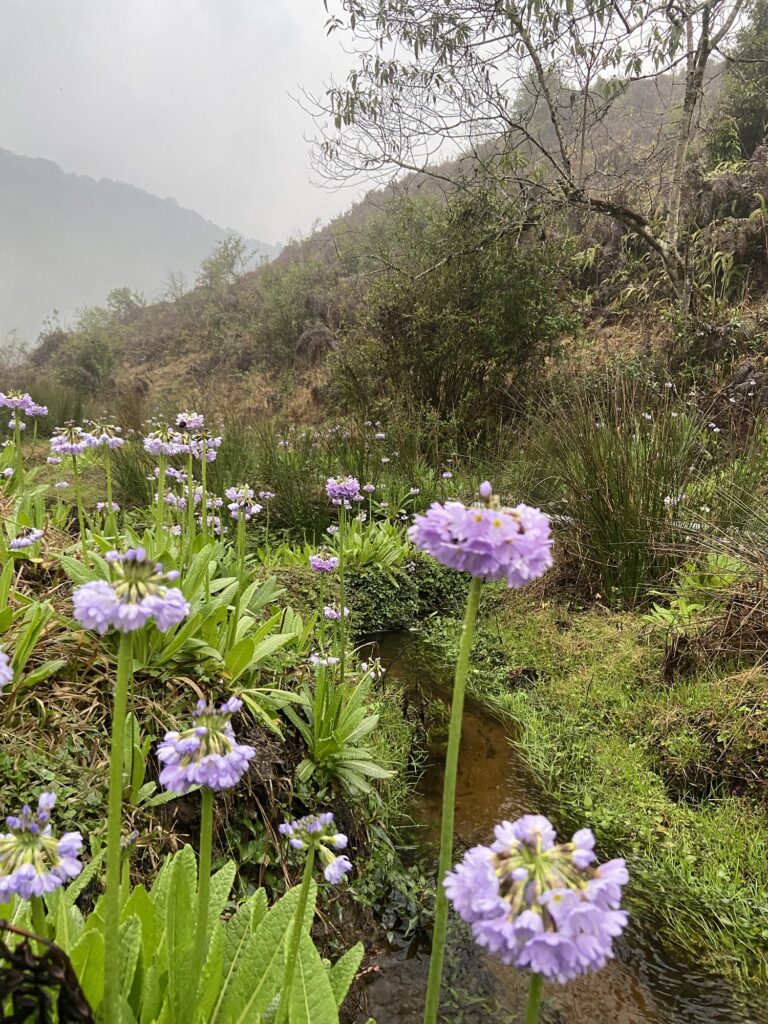
The Drumstick Primrose (Primula denticulata), locally known as ‘Neha Apu’ or ‘Bagañ Rinyo’ in the Apatani language, is a beautiful perennial flower native to the Himalayan region. In Ziro, Arunachal Pradesh, particularly in Hakhe Tari, this plant is a symbol of early spring, painting the landscape with its vibrant colors. The flower gets its name from its distinctive round clusters of blossoms that sit atop tall stems, resembling a drumstick. Blooming in shades of purple, lilac, blue, pink, and white, it adds a stunning visual appeal to the region, attracting nature lovers and photographers.
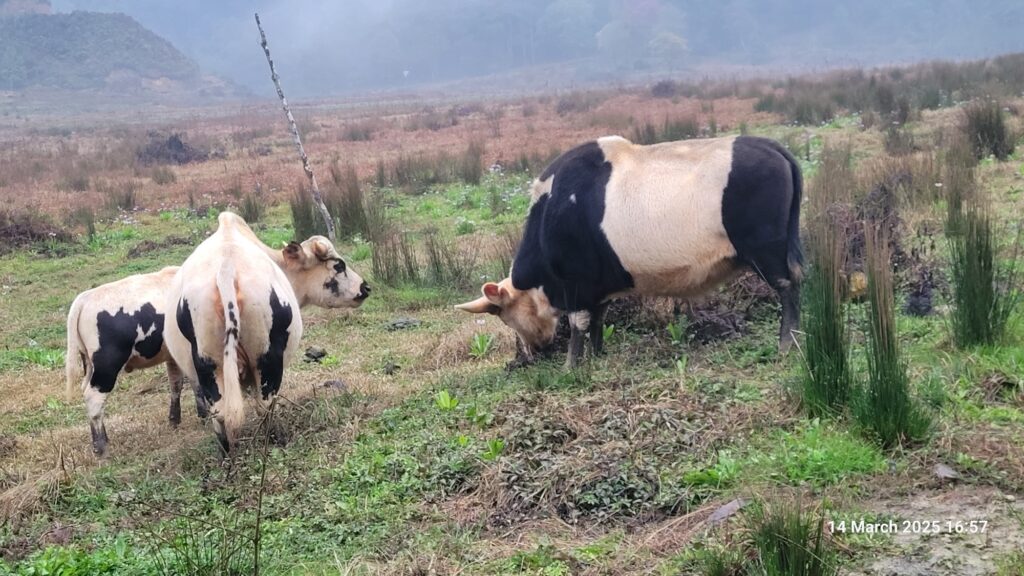
Hakhe Tari is not only famous for its floral beauty but also for its diverse flora and fauna. Additionally, the region is home to the Mithun (Gayal), a semi-wild bovine species that holds deep cultural and economic significance for the indigenous tribes of Arunachal Pradesh. These majestic animals roam freely in the forests and are highly valued in Apatani traditions, often given as gifts during significant ceremonies and social events.
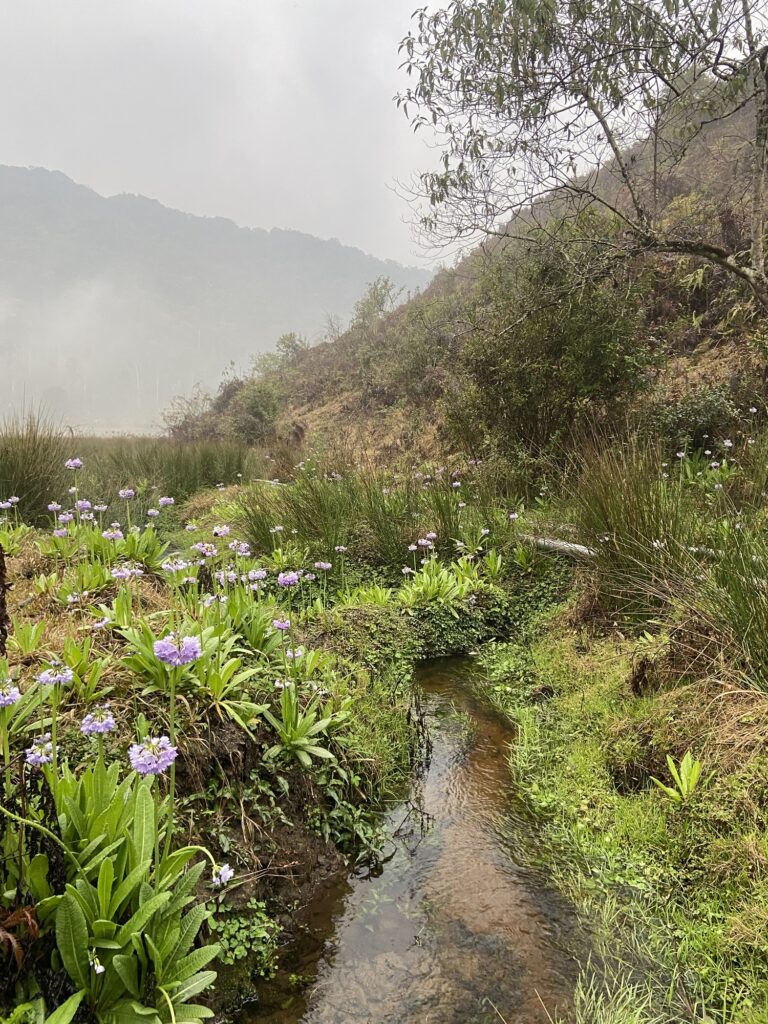
The Drumstick Primrose thrives in moist, cool conditions, usually found near streams, in damp meadows, and shaded woodlands. For those interested in cultivating it, the plant requires humus-rich soil and consistent moisture. While it prefers partial shade, it can tolerate full sun in colder climates if watered adequately. Gardeners often plant it near water sources to maintain soil moisture, and proper care—including mulching and occasional pruning—ensures healthy growth and extended blooming periods.
Beyond its natural beauty, Hakhe Tari serves as a biodiversity hotspot where flora and fauna coexist harmoniously. The presence of the Drumstick Primrose, Bon Frontal, and Mithun highlights the ecological importance of this region. For visitors, it offers not just a visual treat but also an opportunity to appreciate the delicate balance of nature. As spring unfolds, Hakhe Tari remains a stunning testament to the wonders of Arunachal Pradesh, captivating all who witness its seasonal magic.